Home › Emergency and Disaster Commercial Demolition
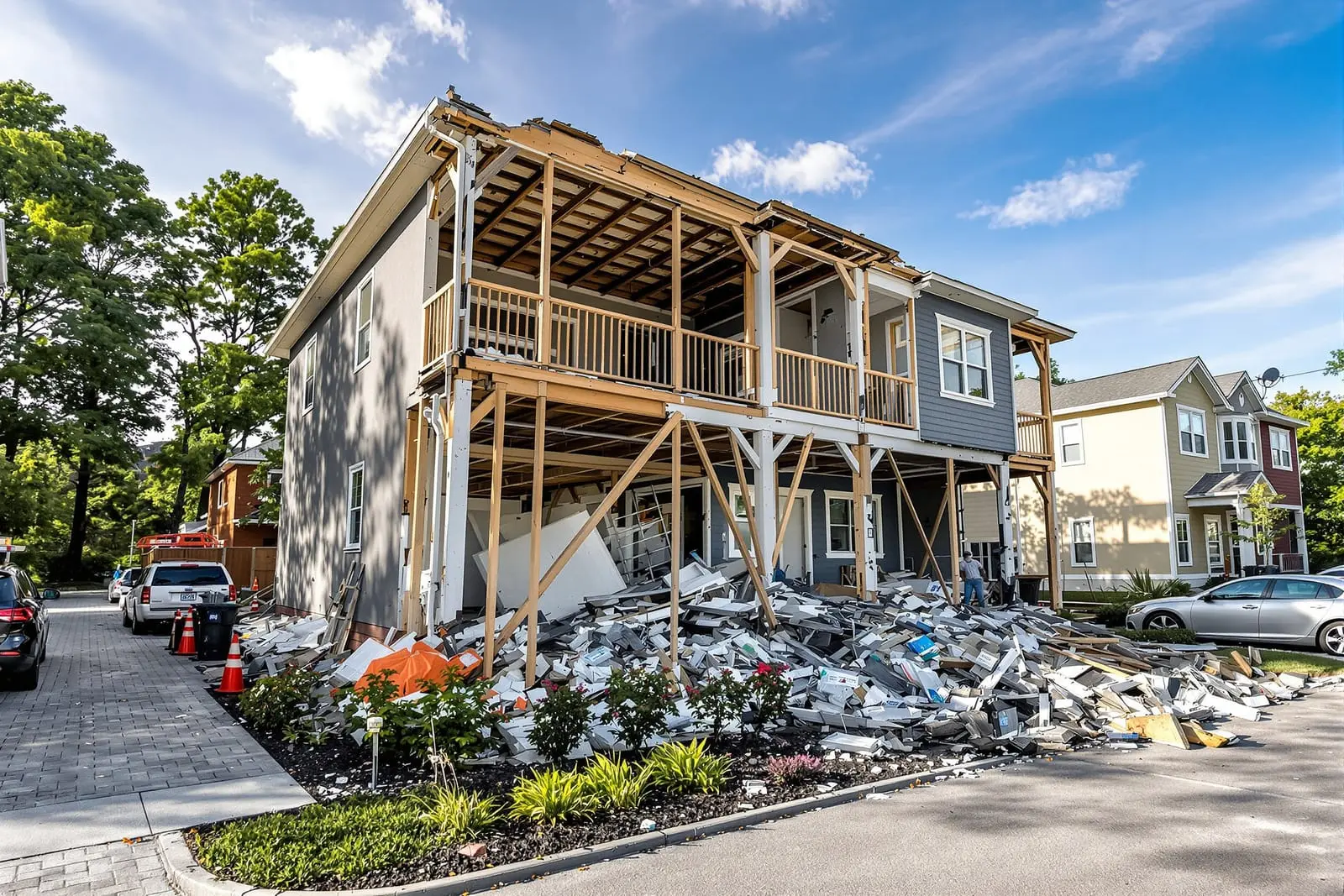
Wrexo Demolition Houston provides emergency commercial demolition in Houston, TX when disasters damage business properties. We quickly assess structural stability, install shoring or fences, and remove collapsed or unsafe sections to protect the public. Our team works with insurers, engineers, and city officials to safely clear sites after fires, storms, or impacts.
Wrexo Demolition Houston provides professional emergency commercial demolition throughout Houston, TX and the surrounding area. Our licensed, insured crew delivers safe, clean, on-time work with a free estimate before anything begins. Call (832) 924-0400 or request your free quote.
Emergency Commercial Demolition When Your Building Cannot Wait
When a storm, fire, explosion, or structural failure hits a commercial property in Houston, the first priority is to make the site safe. Wrexo Demolition Houston provides emergency commercial demolition when a building is unstable, partially collapsed, or too damaged to repair. Our work is focused on fast hazard removal, tight coordination with local officials, and keeping your business interruption as short as possible.
Emergency and disaster commercial demolition is different from planned teardown work. Access is limited, utilities may be compromised, debris can be contaminated, and the structure often cannot be entered safely. We respond by sending a supervisor to the site to meet you, your insurer, and, when needed, the fire marshal or city inspector. Our first decision is simple and critical: what parts of the building must be taken down right now to remove life-safety risks, and what can remain in place for later, more controlled demolition or rebuilding.
In Houston, many emergencies follow heavy rain, hurricanes, or tornado-related wind damage. Tilt-wall warehouses with bowed panels, flood-weakened foundations, and fire-damaged roofs are common. Wrexo Demolition Houston is set up for these specific local conditions, with crews trained to work around standing water, unstable metal roofs, and damaged utilities along the Gulf Coast. We are not a cleanup franchise that subcontracts demolition. We are the team that actually brings the building down safely.
What Happens First: Site Assessment, Stabilization, and Permits
Every emergency commercial demolition project begins with a rapid, focused assessment. We walk the perimeter, look at load paths, identify leaning walls, hanging steel, cracked concrete, and damaged columns, and locate gas, power, water, and data utilities. Where we can do so safely, we coordinate with CenterPoint, the City of Houston, or local MUDs to verify shutoffs. We photograph and document damage in a way that claims adjusters and city officials can use later.
If the building is in active use or close to public areas, we set up an immediate safety perimeter using fencing, barricades, and tape, and we post spotters to keep people out of collapse zones. For multi-tenant commercial centers, we work with property managers to reroute foot and vehicle traffic so neighboring stores can reopen as soon as possible.
Permits are different during an emergency. Houston may issue an emergency demolition authorization when a structure is unsafe. Wrexo Demolition Houston handles this paperwork directly with the city when you authorize us, including submitting engineer letters when required. In disaster situations, such as after a hurricane, we track temporary rule changes that can speed up approvals. Our goal is to avoid wasted hours while still keeping your project compliant so you do not face fines or delays later during rebuilding.
How Emergency Demolition Is Actually Performed
Emergency and disaster commercial demolition involves controlled removal of unstable parts of a structure without making the situation worse. On a typical project, we start at the top of the most damaged area and work down, cutting loose hanging steel, pulling back collapsed roofing, and relieving pressure on bowed walls. Our crews use excavators with specialized attachments, skid steers, manlifts, torches, and concrete saws, depending on the structure.
For fire-damaged commercial spaces, we often deal with partially burned roof trusses, twisted bar joists, and spalled concrete. We remove the roof in sections, keeping our machines outside the collapse footprint whenever possible. With old brick or CMU walls, we avoid pushing inward, which can kick debris into neighboring suites. Instead, we pull outward or dismantle from the top with grapples. When we are working near party walls that must remain for the next build-out, the technique we use is more like surgical deconstruction than simple demolition.
After flooding or hurricane damage, the risks are different. Waterlogged drywall and insulation are heavy and unstable, and steel may be corroded or bent. We may cut relief openings in walls before bringing them down to avoid sudden shifts. For large tilt-wall buildings, we study the panel bracing and connections carefully before cutting. Panels that look stable can rotate unexpectedly if a single connection fails. Wrexo Demolition Houston uses spotters and clear radio communication so operators know exactly when and where to pull.
Throughout the work, we keep a constant eye on debris piles and equipment paths. Unseen voids inside piles can swallow a machine or cause a rollover. By building low, compact piles and working in thin layers, we control this risk and keep the site easier to navigate for subsequent trades and insurance inspectors.
Managing Debris, Hazardous Materials, and Structural Surprises
Emergency commercial demolition always produces unpredictable debris. Before we start heavy work, we locate and flag any tanks, chillers, rooftop units, backup generators, or elevator machinery that may contain oil, refrigerant, or other regulated materials. We coordinate pumping or recovery with licensed partners so these do not rupture during demolition.
On older commercial properties in Houston, we sometimes encounter asbestos-containing materials, such as floor tile, pipe insulation, roofing, or transite panels. Fire, flood, and impact damage do not remove the regulatory requirements. We can arrange for expedited testing and, if needed, licensed abatement before full-scale demolition, or we can isolate certain areas temporarily so the emergency work can proceed where it is legally allowed.
Structural surprises are common. A wall that looked sound from the outside can be hollow behind the veneer, a mezzanine might be supported by a single damaged column, or a pre-engineered metal building can twist when one frame line fails. Wrexo Demolition Houston plans for these unknowns by using step-by-step takedown sequences rather than long, aggressive pushes. The operator does a little, the supervisor reassesses, then we continue. This slower, deliberate approach in critical moments often prevents secondary collapses that could damage neighboring suites, parked vehicles, or adjacent roads.
Debris separation is another area that affects speed and cost. We typically sort concrete, steel, clean wood, and general trash into separate piles. Clean concrete and metal can be recycled, which reduces disposal fees and sometimes offsets a portion of your overall cost. Mixed debris and contaminated materials cost more to haul and dump, so we plan the separation level based on your budget and timeline.
What Drives Cost and Timeline for Emergency Commercial Demolition
The price and schedule for emergency and disaster commercial demolition in Houston are driven by a handful of real-world factors, not flat-rate packages. The size and height of the structure is only one piece. Access, structural condition, debris type, and regulatory requirements often matter more.
Tight downtown or inner-loop locations, with limited staging space, alley-only access, or overhead power lines, are more involved than a standalone warehouse with a large parking lot. Night work, which is sometimes necessary to avoid blocking major roads, can also increase cost due to lighting, traffic control, and city requirements. If your building is near rail lines, pipelines, or critical utilities, expect additional planning and possibly engineering reviews.
The extent of structural damage is another major factor. A fully collapsed section can sometimes be cleared more quickly than a partially damaged area that is still standing but unstable. Structures that require selective demolition so that certain walls, slabs, or structural elements remain for future reuse will always be more labor and planning intensive than a full teardown.
Hazardous materials also influence cost and timing. Confirmed asbestos, heavy mold, chemical residues from industrial processes, and refrigerants all add steps. Even something as simple as a large number of fluorescent fixtures may require separate handling for lamps and ballasts.
Insurance involvement does not always slow a project, but it can if documentation is incomplete. Wrexo Demolition Houston is used to working with adjusters and building owners at the same table. We can provide serial photographs, load counts, and written descriptions of work phases to support your claim so that you are not arguing after the building is already gone.
How to Prepare and What to Expect From Wrexo Demolition Houston
If you are facing a commercial building emergency in Houston, your first step is to secure people and documents, not to clean up. Make sure all occupants are out, close off access, and contact your insurer. Then bring in a qualified demolition contractor who understands emergency and disaster work, not just planned projects.
When you call Wrexo Demolition Houston, be ready to share basic information: the building address, type of structure (for example retail center, warehouse, office, restaurant, medical), the nature of the damage (fire, wind, collapse, vehicle impact, flood), and any known hazards such as chemicals, medical waste, or special equipment. If you have existing structural drawings, sprinkler plans, or utility maps, we can use them to shorten the assessment and identify hidden risks.
During the project, you should expect frequent updates. We explain which areas will be removed first, how we will protect neighboring properties, and where trucks will enter and exit. For multi-tenant properties, we can brief your tenants so they know when noise, vibration, and access changes will occur. Our crews maintain a clean, organized work zone, even in chaotic conditions. That protects your reputation with customers and neighbors who are watching from the street.
The best times of year to schedule non-urgent follow-up work in Houston are typically late fall through early spring. Summer heat and hurricane season increase safety concerns, especially for large roof work and debris hauling. For that reason, Wrexo Demolition Houston often performs immediate emergency stabilization and partial demolition, then returns for planned phases once weather risks decline and insurance decisions are finalized.
Our role is simple. We remove the unsafe structure so your engineers, builders, and restoration teams can bring the property back into service. If you need emergency commercial demolition anywhere in the Greater Houston area, we are prepared to respond with the right people, the right equipment, and a clear, practical plan.
“
Professional emergency and disaster commercial demolition, done right the first time, quality materials, honest pricing, and results that last.
Wrexo Demolition Houston
Emergency and Disaster Commercial Demolition Across Our Service Area