Home › Emergency and Disaster Residential Demolition
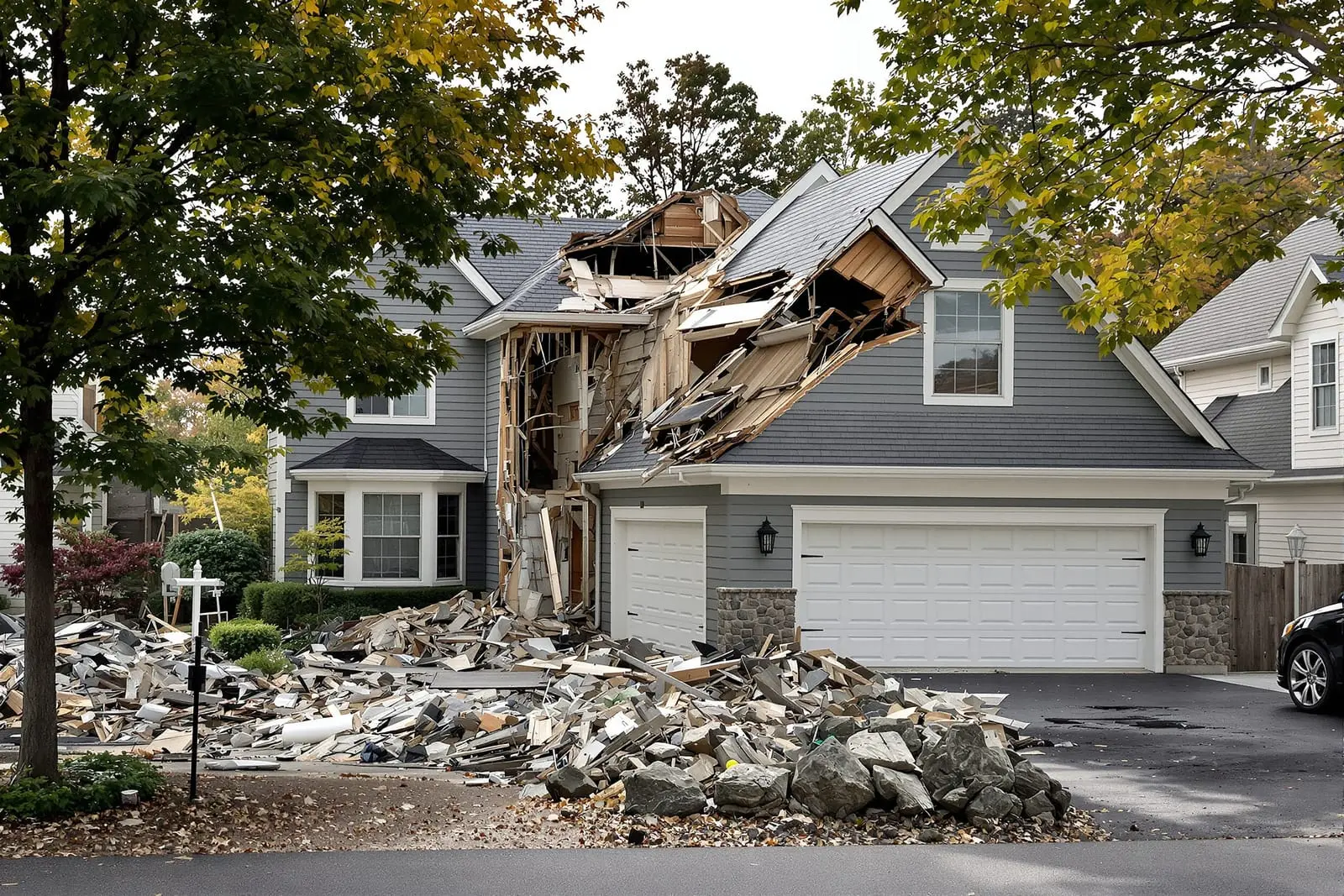
Wrexo Demolition Houston provides emergency demolition services in Houston, TX when homes are damaged by fire, storms, or structural failure. We respond quickly to secure the site, coordinate with insurers and inspectors, and remove unsafe portions or entire structures. Our goal is to make the property safe and ready for cleanup or rebuilding as soon as possible.
Wrexo Demolition Houston provides professional emergency demolition services throughout Houston, TX and the surrounding area. Our licensed, insured crew delivers safe, clean, on-time work with a free estimate before anything begins. Call (832) 924-0400 or request your free quote.
Emergency Residential Demolition When Your Home Is No Longer Safe
When a storm, fire, or structural failure makes your home unsafe, you do not have weeks to wait for help. Wrexo Demolition Houston provides emergency demolition services focused on residential properties across the Houston area, including older pier-and-beam homes, slab-on-grade houses, and townhomes. Our priority is to remove immediate hazards quickly while protecting surrounding structures and utilities.
In a disaster situation, the key decision is whether your home needs a targeted partial demolition or a full structural teardown. Our supervisors arrive on site, assess visible damage, review any engineering or fire reports you have, and walk the property with you. We look at load-bearing walls, roof sag, slab movement, chimney stability, and the condition of attached garages or additions. This evaluation guides how we stage equipment, where we start dismantling, and how we keep neighbors and first responders safe.
Because Houston weather can turn fast, we also consider incoming rain, wind, and extreme heat when planning emergency demolition. If a damaged roof or wall is likely to collapse in the next storm, that area gets priority. If heavy rain is in the forecast, we plan for erosion control and protection of remaining structures and utilities before we bring in heavier machinery.
How Our Emergency Demolition Process Works in a Disaster
Emergency demolition services require a different approach than scheduled teardown work. At Wrexo Demolition Houston, the workflow typically runs in four fast but controlled stages.
First is hazard and safety control. Before touching the structure, we coordinate with CenterPoint or other utility providers to confirm gas, electrical, and in some cases water lines are shut off or safely isolated. We survey for overhead power, propane tanks, compromised trees, leaning walls, and potential asbestos or lead paint. If authorities (fire department, HPD, or city building officials) are on site, we coordinate activity zones with them.
Second is structural stabilization and controlled access. We may install temporary shoring under sagging roof sections or balconies so we can remove them in a controlled way instead of letting them fall on their own. For houses affected by fire, we avoid walking on weakened floors and may cut access openings from the exterior so debris can be removed without putting workers or nearby residents at risk.
Third is the actual demolition, which might involve a combination of manual and machine work. For narrow Houston neighborhoods with tight side setbacks, we use compact excavators instead of large tracked equipment, and we dismantle sections from the top down. We often separate brick from framing as we go, so the load can be hauled in fewer trips and recyclables are not contaminated.
Fourth is debris sorting and site cleanup. We remove hazardous materials first, then structural debris, then non-structural items. If the plan is to rebuild on the same footprint, we also clear and level the slab or remove it entirely if it has been compromised by flooding, undermining, or fire.
What Drives Cost and Timeline for Emergency Demolition
Emergency demolition pricing is shaped by more than square footage. When Wrexo Demolition Houston prepares a quote, we consider the level of damage, how urgent the work is, and how complex the site conditions are.
Severity and location of damage matter. A partially collapsed second story over an intact first floor costs more to remove than a single-story home that is already largely on the ground, because we have to dismantle portions carefully to avoid crushing the lower level or neighboring property. Fire-damaged homes often require more hand work and more dump runs because charred material weighs less but occupies more volume in trucks.
Hazard conditions also affect cost. Presence of asbestos in older siding, floor tiles, or joint compound triggers regulated abatement steps. This means we coordinate testing, perform or schedule licensed removal, and stage sealed containers for transport. Similarly, homes with mold contamination from prolonged Houston flooding may require specialized PPE, negative air machines for interior work areas, and extra time for safe handling of saturated drywall and insulation.
Access and neighborhood constraints are another factor. Inside the Loop or in dense suburbs, we may need smaller trucks, street closure permits, and additional flaggers, which extends project duration. If your subdivision has HOA rules about working hours or truck routes, we build that into the schedule as well.
Emergency work can carry premium labor and equipment rates when it must begin at night, on weekends, or under active threat of further collapse. We are transparent about these factors, so you understand why a 1,800 square foot house on a clear flat lot costs differently than a similar house on a tight corner lot with live utilities and severe structural instability.
Local Hazards in Houston and How They Change Demolition Strategy
Houston’s mix of hurricanes, straight-line wind events, flooding, and extreme heat means emergency demolition services have to adapt to local conditions.
After hurricanes or major windstorms, we often see homes with partial roof removal, racked framing, and damaged carports or patio covers blown into neighboring yards. In these cases, we prioritize removal of hanging roof sections, loose brick veneers, and unstable chimneys that can fall when the next gust or gust front comes through. When heavy rain follows wind damage, water intrusion can quickly rot already stressed framing, so our timeline and sequencing account for that accelerated deterioration.
Flood events create different issues. Long-term standing water can undermine slabs, wash out soil around piers, and swell subfloor materials. Homes that look straight from the street can have compromised foundations or hidden mold inside wall cavities. Before demolition, Wrexo Demolition Houston checks for foundation heave, settlement cracks, and separation at framed connections so we know in which direction a structure is likely to move when we begin dismantling.
Heat and humidity also affect how we stage work. In the middle of a Houston summer, worker safety rules limit continuous heavy labor in direct sun. We adjust shifts earlier or later in the day, rotate crews, and time machine-heavy tasks to avoid breakdowns and overheated hydraulic systems. This planning keeps emergency projects moving even when the heat index is extreme.
Finally, local soil and drainage conditions can be problematic after demolition, especially on lots that have flooded more than once. If you plan to rebuild, we can rough grade the site, remove undermined sections of driveway, and, if requested, coordinate with your builder or engineer on how the cleared site should be left for future foundation work.
Coordinating With Insurance, City Inspectors, and First Responders
Emergency residential demolition in Houston often involves more than just a contractor and a homeowner. Wrexo Demolition Houston regularly interfaces with city officials, fire marshals, adjusters, and sometimes mortgage companies to keep everything synchronized.
For insured losses, we help document the condition of the structure before and during demolition. This typically includes photos, video walkthroughs, notes on structural failure points, and load counts from debris hauling. Many carriers require proof that demolition was necessary and not just convenient. Our reports and invoicing clearly separate emergency shoring or partial removal from full demolition and debris removal.
The City of Houston and nearby municipalities may issue unsafe structure notices, red tags, or demolition orders after a fire or collapse. In truly urgent cases, the city can authorize immediate partial demolition to protect the public. We are familiar with these procedures and can coordinate with code enforcement and permitting staff to comply with local rules while still moving quickly.
If first responders are still using the site to investigate a fire, explosion, or structural failure, we wait for their clearance or work only in specified zones. This prevents us from disturbing evidence and protects you from delays caused by an interrupted investigation. Once they release the scene, we can transition directly into controlled demolition and debris removal according to the approved plan.
If your lender or HOA must sign off before demolition, we can provide scope descriptions, schedules, and proof of insurance to streamline their review, which is often necessary when the home secures a mortgage or when community architectural guidelines apply even after a loss.
Safety, Environmental Controls, and Material Handling
Because disaster sites are unpredictable, safety and environmental controls are central to how we deliver emergency demolition services.
Personal and site safety start with a written plan. Our crews use hard hats, eye and respiratory protection, high-visibility vests, and, when needed, harnesses for elevated work. We keep a clear perimeter with fencing or caution tape, and in tight Houston neighborhoods we often post a dedicated spotter to watch for pedestrians, pets, and vehicles whenever equipment is operating.
Dust management matters in residential settings, especially when neighbors are close. We use water spray bars and hose lines to keep dust down while we break apart roofing, masonry, or plaster. In older homes that may contain lead-based paint or asbestos-containing materials, we take extra care to avoid uncontrolled breakage and to follow appropriate containment and disposal rules.
Debris separation happens on site. Clean concrete, brick, and metal are sorted for recycling where feasible. Burned framing, damaged sheetrock, and mixed residential debris are loaded separately. This approach can reduce disposal fees and helps minimize the environmental impact of your project.
For homes affected by fuel leaks, chemical spills, or sewer backups, we may bring in lined containers, absorbents, and additional PPE. In those situations we coordinate with specialized remediation contractors when required by regulation, so that hazardous materials are handled correctly before or during demolition rather than being buried under non-hazardous debris.
What Homeowners Should Expect When You Call Wrexo Demolition Houston
When you contact Wrexo Demolition Houston for emergency demolition services, our goal is to give you clarity in a very uncertain moment.
We start with a phone or video consultation to understand what happened, review any photos you can send, and determine whether immediate mobilization is needed or whether the structure is stable enough to wait for daylight. We give you an honest assessment of what we can safely do in the first 24 to 72 hours and what steps may require permits or outside approvals.
On site, we walk you through which parts of the home must come down for safety and which portions, if any, might remain for rebuilding. We are straightforward about when full demolition is the only realistic option, particularly when the cost of partial salvage exceeds the benefit or when structural continuity has been lost.
You can expect clear communication about schedule, noise levels, truck traffic, and what your neighbors will see. We advise you on where to park cars, how to secure pets, what belongings (if any) might still be safely removed, and when it is best to stay away from the immediate work zone.
After demolition is complete, we leave the site in a condition that matches your next step. If your plan is to rebuild, that means a cleared and reasonably level site, with obvious hazards removed and utilities clearly marked or capped. If the property will be sold as land, we can provide documentation of demolition and debris removal to support your transaction.
Throughout the process, you will deal with a designated project lead who understands both construction and disaster response, so you do not have to repeat your story to a different person every day while the work is underway.
“
Professional emergency and disaster residential demolition, done right the first time, quality materials, honest pricing, and results that last.
Wrexo Demolition Houston
Emergency and Disaster Residential Demolition Across Our Service Area