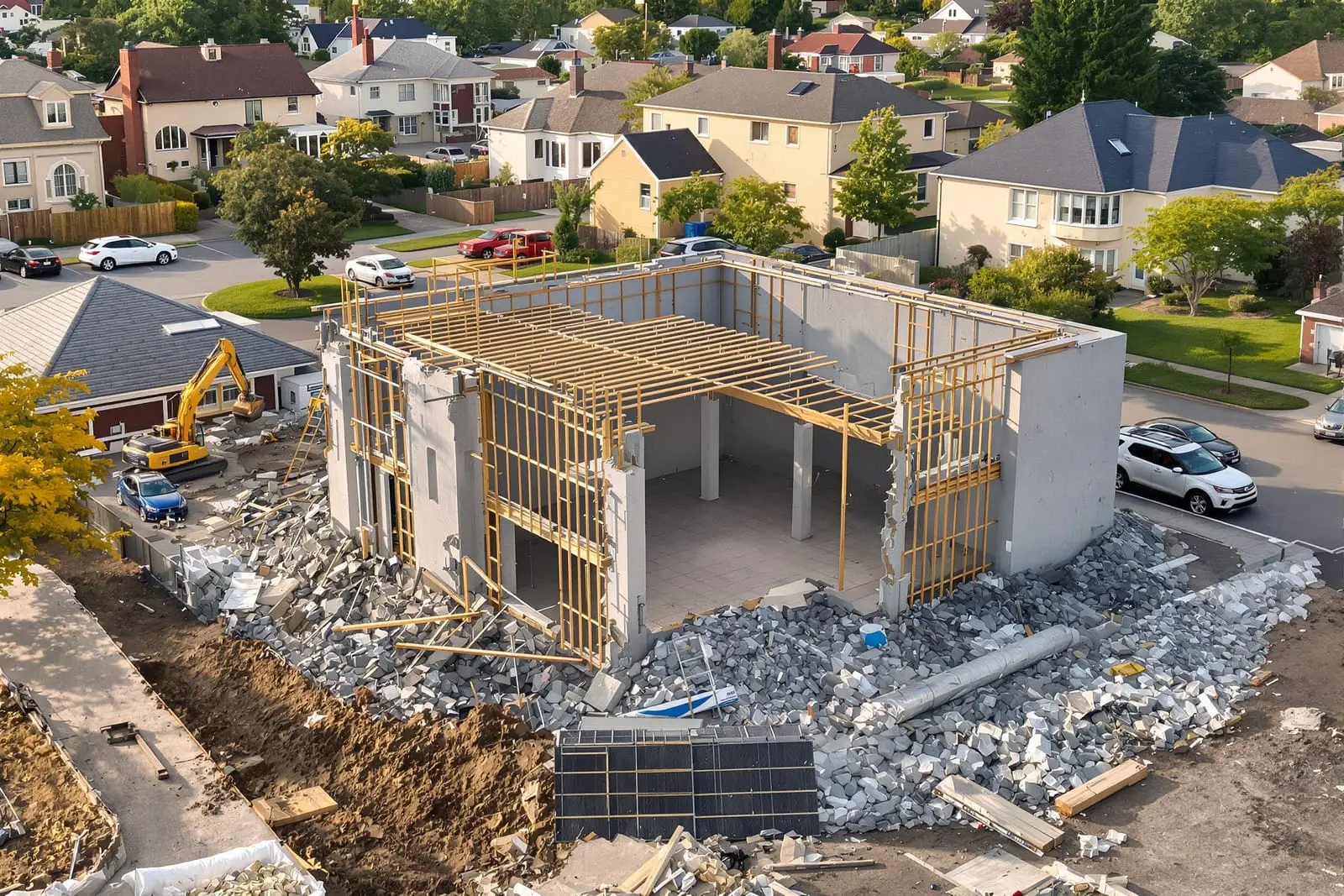
Wrexo Demolition Houston performs structural building demolition in Houston, TX for commercial, industrial, and institutional facilities. Our team develops engineered demolition sequences, secures utilities, and uses heavy equipment to safely bring down steel, concrete, and masonry structures. We manage dust, noise, and debris so surrounding properties and public areas stay protected throughout the project.
Wrexo Demolition Houston provides professional structural building demolition throughout Houston, TX and the surrounding area. Our licensed, insured crew delivers safe, clean, on-time work with a free estimate before anything begins. Call (832) 924-0400 or request your free quote.
Structural Building Demolition in Houston, Done the Right Way
Structural building demolition is not just “knocking a structure down.” It is a controlled removal of load‑bearing elements, slabs, and foundations so the site is safe and ready for its next use. At Wrexo Demolition Houston, we focus on how the building was originally built so we can take it apart safely and efficiently in Houston’s dense and often tightly regulated environments.
For every structural demolition project, we start with a site walk that looks at access routes, overhead utilities, soil conditions, and how close neighboring structures are. A pre‑demolition survey of the building’s frame, roof system, and foundations lets us decide whether to use heavy mechanical equipment, partial hand demolition, or a phased approach. In Houston, many older masonry buildings hide unrecorded structural modifications and previous storm damage, so we plan for the unexpected and build in checkpoints before taking out key supports.
Our goal is to minimize vibrations, control debris, and keep adjacent properties, sidewalks, and streets fully protected. Structural building demolition by Wrexo Demolition Houston is a coordinated operation from the first cut in the roof deck to the last truck leaving with crushed concrete.
How We Plan a Structural Building Demolition Project
Our process begins with a structural review and utility clearance. We confirm water, gas, electrical, and communications are properly disconnected or safely re‑routed. In Houston, CenterPoint and local utility providers often require specific lead times, so early coordination keeps your schedule realistic.
Next, we perform a structural analysis. We identify primary load paths, column lines, lateral bracing, and any post‑tensioned slabs or beams. If field conditions do not match the drawings, our team adjusts the sequence so no element is removed before its loads are safely redirected. This matters for multi‑story structures, where a wrong cut can cause an uncontrolled collapse.
We then develop a demolition plan that includes equipment selection (excavators with hydraulic shears, breakers, grapples, skid steers inside tight footprints), fall zones, and debris routes. For downtown or close‑quarters Houston projects, we often phase the demolition one bay at a time and use smaller, high‑reach equipment to keep everything inside the property line.
Finally, we prepare a site‑specific safety and dust control plan. This includes fencing, scaffolding or overhead canopies if needed, debris netting, water misters or hose lines for dust, and traffic control setups that satisfy Houston Public Works and, when needed, TXDOT along major corridors.
Step‑by‑Step: How Structural Building Demolition Actually Happens
On demolition day, we start by securing the perimeter and setting up traffic and pedestrian control. Spotters, flaggers, and equipment operators review hand signals and radio channels. We verify again that utilities are locked out and tagged.
Soft strip and interior removal come first. We remove non‑structural elements like drywall, ceilings, flooring, interior glass, and non‑load‑bearing walls. Salvageable items such as metal fixtures or architectural features can be separated at this stage if the owner wants recovery value.
Then we move to roof and upper structure removal. For multi‑story buildings, we typically work from the top down. Using excavators with shears or breakers, we cut or break beams and floor sections in a planned sequence. We avoid “pushing” entire elevations at once in tight Houston neighborhoods, and instead reduce height in controlled segments while maintaining lateral stability.
Load‑bearing walls, columns, and main frames are cut or broken in an order that prevents sudden shifts. When dealing with steel frames, we often torch cut specific connection points and then use mechanical equipment to pull members inward onto the slab. For concrete frames, we score key locations, use hydraulic breakers, and limit the size of falling pieces to reduce vibration to nearby foundations.
Once the above‑grade structure is down, we focus on foundations and slabs. We break up footings, grade beams, and thickened edges, then remove or process rebar for recycling. The site is rough graded and compacted so your builder or civil contractor can mobilize with minimal re‑work.
Houston‑Specific Factors That Affect Structural Demolition
Houston’s environment and regulations directly affect how structural building demolition is carried out. The high water table, expansive clay soils, and frequent heavy rains influence how foundations behave once we start breaking them out. At Wrexo Demolition Houston, we assess drainage and slope early so runoff and slurry do not impact neighbors or storm inlets.
The City of Houston and Harris County have requirements related to stormwater protection, noise limits, and working hours. On larger structural demolition projects, we often coordinate with inspectors and sometimes with nearby businesses or HOA boards so everyone understands when noisy activities like concrete breaking will occur.
Wind and weather also matter. During peak summer heat, we schedule heavier equipment work in earlier hours and allocate more water for dust without creating mud that trucks cannot drive through. Before forecasted storms, we secure loose materials and make sure stockpiles will not migrate into streets or ditches.
Finally, Houston’s mix of older masonry buildings, tilt‑wall concrete, and newer steel and glass structures means each project needs its own approach. For example, tilt‑wall buildings along beltway corridors often allow for relatively quick panel removal, while older brick structures inside the Loop may require partial hand demolition to protect shared party walls and narrow alleys.
Cost Drivers and How to Control Your Demolition Budget
Structural building demolition cost is driven by several measurable factors: building size and height, structural system, site access, and disposal or recycling requirements. A one‑story tilt‑wall warehouse with open access and clean concrete will generally cost less per square foot than a multi‑story mixed‑use structure pressed against active businesses.
Material type is a major factor. Heavy reinforced concrete takes more time and bigger equipment than light structural steel and metal panels. Post‑tensioned slabs require extra labor and specialized steps to de‑tension or cut cables safely. If asbestos, lead‑based paint, or other regulated materials are present, abatement must be completed before structural demolition proceeds.
Site logistics can add or reduce cost. Tight downtown Houston locations that need smaller equipment, night work, or lane closures will be higher on a per‑square‑foot basis. Wide‑open sites with room for on‑site concrete crushing and metal sorting can save on hauling and disposal.
You can control budget by providing any existing drawings, previous geotechnical reports, or renovation records. Clear project goals help as well. If you plan to reuse parts of the foundation or keep certain site utilities in place, Wrexo Demolition Houston can adjust the sequence to protect those elements and avoid later re‑work. Early conversations about recycling targets also matter, since higher recycling rates can offset a portion of hauling and landfill fees.
Permits, Utilities, and Compliance in the Houston Area
Structural building demolition in Houston involves more than equipment and operators. The City of Houston requires demolition permits, and in some cases separate permits for disconnecting water and sewer. Harris County, Fort Bend County, and surrounding jurisdictions each have their own procedures for projects outside city limits.
We help owners and general contractors identify which permits apply and what documentation is needed, such as site plans, utility letters, and notices of asbestos survey or abatement. Coordinating this up front keeps your project from stalling once the building is already vacated.
Utility coordination is a critical step. Power, gas, telecom, and water services must be shut off, relocated, or clearly protected if they pass through the site to serve neighbors. In older Houston neighborhoods, we often encounter undocumented private lines or abandoned services. Wrexo Demolition Houston uses a combination of locator services, exploratory potholing, and field verification so we do not damage active utilities during structural demolition.
We also address environmental compliance. That can include erosion controls, track‑out prevention on public roads, and proper manifesting of debris to approved facilities. Transparent recordkeeping protects you if you later need to prove that the structural building demolition and waste handling were done correctly.
What to Expect When You Hire Wrexo Demolition Houston
When you bring Wrexo Demolition Houston onto a structural building demolition project, you get a team that understands both the engineering realities and the local constraints of working in and around Houston.
Before work begins, you will receive a clear scope of work, sequence overview, and a schedule that highlights major milestones, such as utility cutoffs, structural takedown start, and foundation removal. During demolition, we keep a superintendent or foreman on site to coordinate deliveries, address field surprises, and update you on progress.
We plan for issues that are common on Houston projects, like discovering unrecorded structural alterations, underground obstructions, or poor fill soils under existing slabs. Our crews adjust the approach while keeping you informed on any cost or schedule implications.
At the end of the project, we provide a site that meets the agreed turnover condition, whether that is rough graded for a civil contractor, left at a specific elevation, or prepared for geotechnical testing. Our objective is that your next phase, whether it is new construction, paving, or site sale, can begin without delay caused by incomplete or poor‑quality structural demolition.
“
Professional structural building demolition, done right the first time, quality materials, honest pricing, and results that last.
Wrexo Demolition Houston
Structural Building Demolition Across Our Service Area