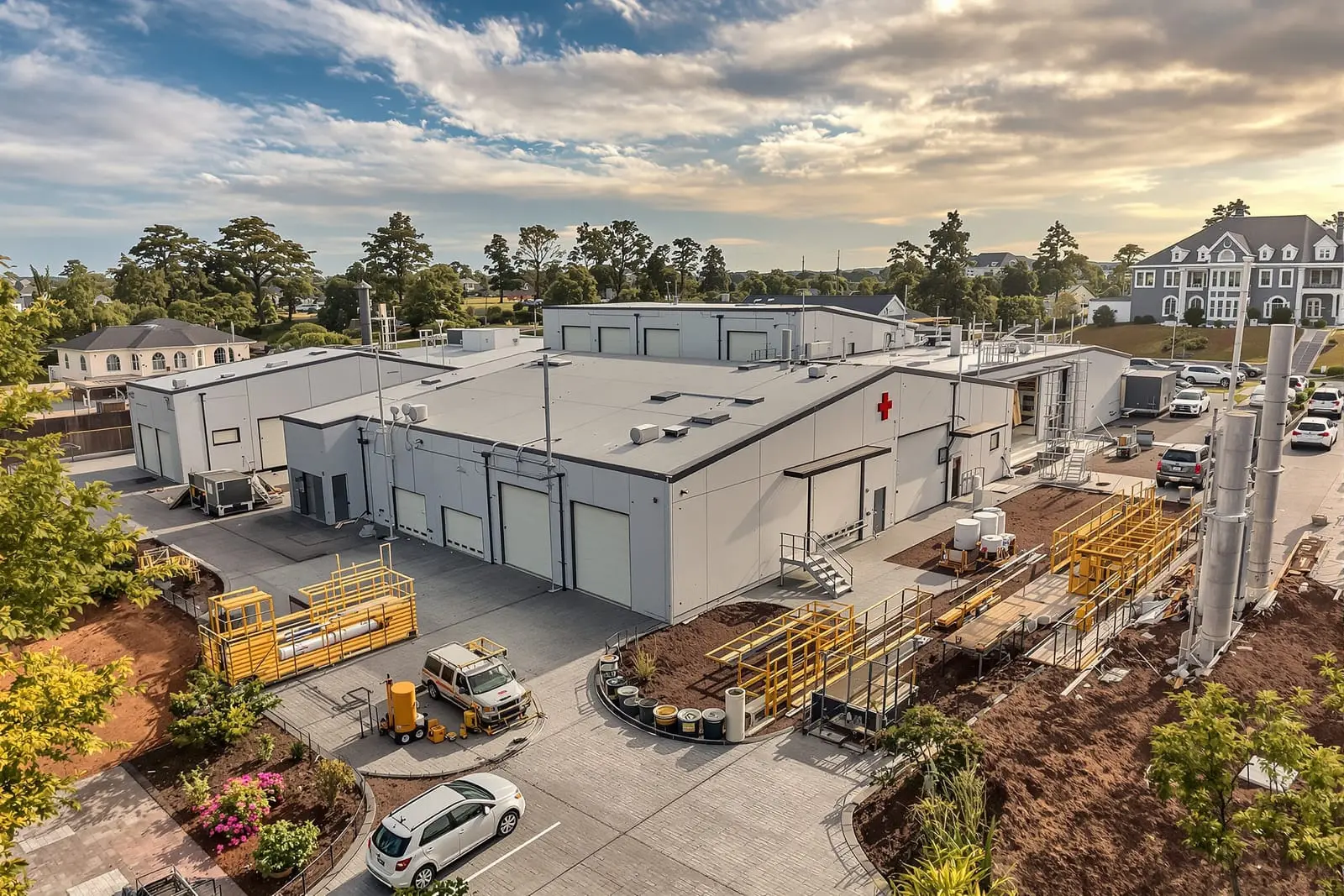
Wrexo Demolition Houston provides plant decommissioning in Houston, TX for chemical, manufacturing, and energy facilities. We develop closure plans, disconnect and remove process equipment, clean systems, and dismantle structures and utilities. Our experienced team manages environmental compliance, asset recovery, and phased demolition to safely retire complex industrial sites.
Wrexo Demolition Houston provides professional plant decommissioning throughout Houston, TX and the surrounding area. Our licensed, insured crew delivers safe, clean, on-time work with a free estimate before anything begins. Call (832) 924-0400 or request your free quote.
Specialized Plant Decommissioning in Houston, TX
Plant decommissioning is not just demolition. It is a controlled process of shutting down, cleaning out, dismantling, and removing all systems in an industrial facility so the site can be reused, sold, or safely abandoned. Wrexo Demolition Houston focuses on complex industrial environments, including chemical plants, food processing facilities, refineries, packaging plants, and large manufacturing lines across the Greater Houston area.
In Houston, plant decommissioning often has to be coordinated with ongoing operations on adjacent units, neighboring tenants, or live utilities that cannot be interrupted. Our team plans work so that gas lines, electrical feeders, and process piping are identified, traced, isolated, and verified dead before any cutting or rigging begins. We create a site-specific execution plan that details what will be removed, what stays, and how each piece will be accessed.
From the first walk-through, we look for practical constraints that affect schedule and cost, such as low overhead clearances in older plants, limited laydown areas in dense industrial parks, and access routes for heavy-haul trucks on local Houston roads and freeways. This early planning keeps surprises, change orders, and downtime to a minimum.
Step-by-Step Decommissioning Process
Effective plant decommissioning follows a defined sequence. First is data gathering. Wrexo Demolition Houston reviews available P&IDs, electrical one-lines, as-built drawings, and equipment lists, then validates them in the field. Where documentation is outdated, we perform field verification, tagging live utilities and confirming isolation points.
Next is isolation and make-safe. We coordinate with your internal maintenance, utilities, and any third-party providers to lock out and tag out (LOTO) electrical circuits, isolate process lines, drain and ventilate vessels, and remove fuels and lubricants. In older Houston plants, we often find undocumented tie-ins or backfeeds, so we test circuits and lines with appropriate instruments instead of relying only on drawings.
Once the plant is made safe, we move into soft strip and pre-dismantling. This includes removing small-bore piping, valves, motors, control cabinets, platforms, and non-structural elements to create clear work areas. Sensitive or reusable items, such as OEM skids, stainless equipment, and instrumentation, are segmented and packed for reuse or resale according to your asset recovery strategy.
Structural dismantling follows. Using torches, shears, cranes, and elevated work platforms, we take down steel structures, equipment towers, tanks, and major process lines in a planned sequence, typically top-down to avoid unplanned collapses. We segment large items to fit hauling regulations and on-site handling capabilities. Finally, we handle debris removal, recycling, backfilling of pits if required, and site cleaning to the level agreed in the scope, whether that is demolition-ready, construction-ready, or sale-ready.
Hazard Identification, Environmental Controls, and Compliance
Major risks in plant decommissioning are usually not obvious at first glance. Wrexo Demolition Houston conducts a formal pre-work hazard assessment that covers process residues, historical chemical use, potential asbestos-containing materials, lead-based coatings, PCBs in older transformers, and flammable or explosive atmospheres.
In the Houston region, many older plants have legacy insulation, transite panels, or gaskets that contain asbestos, particularly in steam systems and high-temperature process lines. We coordinate asbestos surveys through licensed inspectors when needed, then schedule abatement with qualified contractors so that demolition only begins after regulated materials are removed or contained.
For facilities that handled chemicals, oils, or food products, we plan tank and piping cleaning, line purging, and residue removal. Where necessary, we use inert gas purges, foam, or water flushing to eliminate ignition sources and vapors before cutting. Any required notifications to agencies such as the TCEQ (Texas Commission on Environmental Quality) are addressed within the project plan, and we follow Houston and Harris County requirements for waste manifests, transport, and disposal.
Dust, noise, and vibration are controlled using water spray, localized shielding, and scheduled high-noise operations. This is critical for plants adjacent to neighborhoods, schools, or shared industrial complexes common along the Houston Ship Channel and in industrial parks like those in Baytown and Pasadena.
Cost Drivers and How to Control Your Budget
Plant decommissioning cost is driven by more than just square footage. Wrexo Demolition Houston explains the main factors upfront so you can make informed decisions.
Key cost drivers include: the volume and type of process residues or contamination that must be cleaned before dismantling; presence of regulated materials such as asbestos, lead, or specialty fireproofing; access constraints that require more crane time, specialty rigging, or night work; and your desired end condition (basic shutdown and equipment removal versus full slab removal and backfill).
Scrap recovery and asset resale can offset a portion of the cost. Stainless steel, copper, aluminum, and marketable machinery can generate significant credits in some projects. We provide realistic scrap valuations based on current Gulf Coast market pricing, not inflated estimates, and we structure contracts so you see how salvage value affects your bottom line.
Another major driver in Houston is schedule pressure. Compressed timelines often require double shifts, weekend work, and parallel crews, which impacts labor costs and safety planning. We work with your shutdown windows, property sale dates, or lease terminations to find a schedule that meets your obligations without unnecessary overtime.
You can help control budget by consolidating decisions early, providing existing drawings and maintenance history, defining clearly what must be saved versus scrapped, and allowing adequate time for proper surveys and sampling.
Equipment, Methods, and Safety Controls in Active Industrial Areas
Plant dismantling in Houston frequently occurs inside live industrial complexes, with neighboring units that must keep running. Wrexo Demolition Houston selects methods and equipment that minimize risk and disruption.
We use a combination of hydraulic excavators with shears or concrete breakers, mobile cranes, rough-terrain forklifts, manlifts, and occasionally gantries or skids where crane access is limited. Nibbling and cutting is favored over impact when vibration could affect neighboring process units, labs, or offices.
Hot work is tightly controlled with a permit system, fire watches, and atmospheric monitoring when needed. In many plants, we establish a dedicated “cold work only” strategy in sensitive areas and pre-remove combustible materials so hot work is confined to safe zones.
Safety controls include site-specific orientation for all workers, clear demarcation of exclusion zones, daily pre-task planning, and alignment with your existing facility safety culture. In Houston, many industrial clients follow OSHA, API, and internal corporate standards. Our supervisors are used to integrating our procedures with your site rules, including PPE requirements, confined space entry, and work-at-height policies.
We also plan logistics such as traffic flow for roll-off dumpsters and scrap trucks, especially where access roads tie into busy local streets or state highways. This coordination avoids blocking other tenants and reduces friction with business neighbors.
Permitting, Local Regulations, and Utility Coordination in Houston
While interior plant decommissioning often falls under different rules than full structural demolition, there are still local requirements that must be respected. Wrexo Demolition Houston helps navigate the Houston-area regulatory environment so your project is not delayed by paperwork.
For projects that change or remove building structures, wall openings, or external tanks, city or county permits may apply, depending on jurisdiction (City of Houston, unincorporated Harris County, or nearby municipalities like Pasadena, La Porte, or Baytown). We work with you and your design professionals to obtain any required building, demolition, or utility permits.
Utility coordination is critical. We verify and schedule shutoffs or reconfigurations with CenterPoint Energy, water and sewer providers, telecom carriers, and any private utility owners on your site. In many Houston industrial areas, private utility corridors are dense and not fully documented, so we use a combination of records research, private locates, and careful exposure before cutting.
If your project may impact stormwater discharge or involves decommissioning of sumps, separators, or process drains, TCEQ stormwater compliance and potential modifications to your permits may be needed. We can sequence work so that compliance sampling, closure reporting, and physical dismantling line up with your environmental consultant's plan.
For facilities with air permits tied to operating equipment, it is important to coordinate decommissioning dates with your permit modifications or terminations. We work with your environmental team so equipment removal does not get ahead of or lag behind paperwork.
Choosing Wrexo Demolition Houston for Plant Decommissioning
Selecting the right contractor for plant decommissioning in Houston is about risk, not just price. You need a company that understands industrial processes, site safety, and local conditions. Wrexo Demolition Houston brings focused experience with Gulf Coast plants, refineries, and manufacturing facilities, along with a practical, field-driven approach to planning.
When we bid or budget your job, we walk the site with operations and maintenance staff who know its history. We ask specific questions about past incidents, process changes, undocumented tie-ins, and long-idle areas, because those are where surprises usually occur. Our proposals clearly separate decommissioning, dismantling, abatement, and environmental scope so you can align them with your internal teams and outside consultants.
We are comfortable working under master service agreements, within strict corporate EHS systems, and in coordination with other contractors during outages and turnarounds. For smaller owners or facility managers who do not have in-house EHS, we help assemble a realistic sequence and connect you with environmental professionals when needed.
Whether you are shutting down a single process line in north Houston, decommissioning a multi-building plant near the Ship Channel, or preparing a former production facility for sale to a new tenant, our goal is to turn a high-risk, complex project into a controlled process with clear milestones, transparent communication, and a predictable outcome.
“
Professional plant decommissioning and dismantling, done right the first time, quality materials, honest pricing, and results that last.
Wrexo Demolition Houston
Plant Decommissioning and Dismantling Across Our Service Area