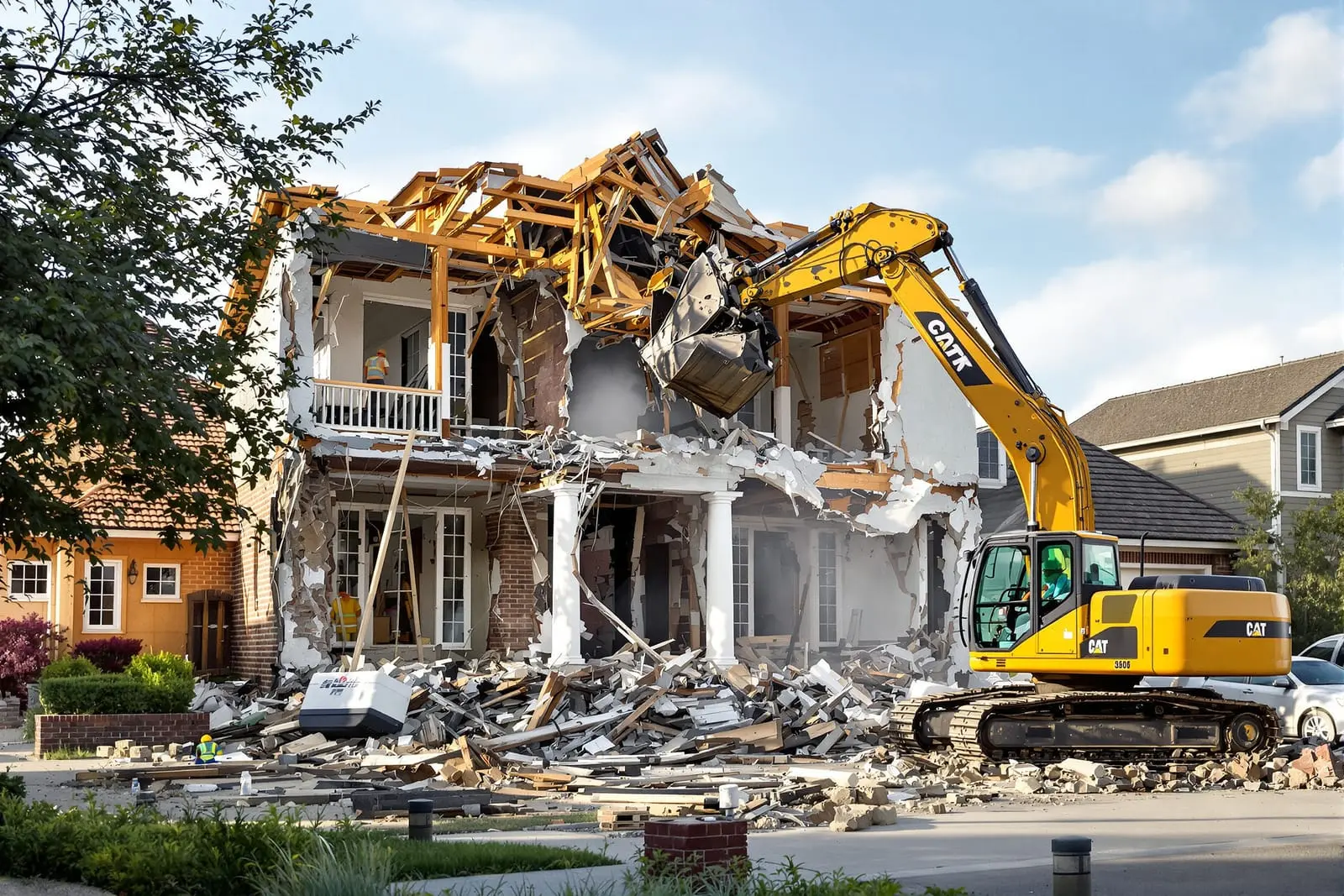
Wrexo Demolition Houston offers safe, efficient whole house demolition in Houston, TX for outdated, storm damaged, or unsafe structures. Our team handles structural teardown, foundation removal, and debris hauling so your lot is ready for new construction. We coordinate permits, utility disconnects, and inspections to keep your project compliant and on deadline.
Wrexo Demolition Houston provides professional whole house demolition throughout Houston, TX and the surrounding area. Our licensed, insured crew delivers safe, clean, on-time work with a free estimate before anything begins. Call (832) 924-0400 or request your free quote.
Whole House Demolition in Houston: What You Are Really Paying For
Whole house demolition in Houston is rarely a simple “knock it down and haul it off” job. Wrexo Demolition Houston starts by looking at how your house was built, when it was built, and how close it sits to neighbors, trees, and power lines.
In many older Houston neighborhoods like Northside, Eastwood, and parts of the Heights, wood-frame houses sit on pier-and-beam foundations with tight lot lines. These are usually best handled with a mechanical demolition using an excavator, but with more careful sequencing so we do not undermine adjoining fences, driveways, or garage slabs you want to keep. Newer slab-on-grade homes in suburbs like Katy or Cypress often involve heavier concrete, more brick, and more rebar. That affects which machines we bring, how many trucks we schedule, and how we break and remove the slab.
Your cost is driven by four core items: structure size and height, access for equipment, materials in the house (brick, concrete, metal, wood, roofing), and special handling such as asbestos or lead paint. A small one-story 1,200 square-foot wood house on an open lot is a different job than a 3,500 square-foot two-story brick home on a narrow Montrose lot with overhead utilities at the street. Wrexo Demolition Houston prices each job after a site visit so we can factor in those specifics, rather than quoting a single generic “per square foot” number that falls apart when reality hits the ground.
How Wrexo Demolition Houston Handles the Full Demolition Process
Our whole house demolition process is structured so you know what is happening each step of the way and why it matters.
1) Site visit and assessment: We walk the property, measure rough square footage, check for trees, fences, detached garages, pools, and any structures you want to keep. We also note overhead power lines, gas meters, water lines, and nearby structures that could be affected.
2) Utility coordination and permits: Before any demolition, we coordinate confirmation of disconnects for electric, gas, and water. In Houston, the city requires proof that utilities are shut off before issuing permits. Wrexo Demolition Houston handles the demolition permit paperwork within city limits and coordinates with you if the property is in an ETJ or neighboring municipality that has its own process.
3) Hazard screening: For homes built before about 1980, we recommend asbestos testing for materials like floor tiles, mastic, popcorn ceilings, and some siding or roofing. If asbestos is present, a licensed abatement contractor must remove it before structural demo begins. We can bring in trusted specialists or work with a contractor you prefer.
4) Salvage and strip-out: Before heavy machinery comes in, we remove items that can be salvaged or that should not go through the bucket, such as appliances, water heaters, HVAC units, certain fixtures, and sometimes old-growth framing lumber worth reclaiming. This phase can reduce your disposal volume and may lower cost.
5) Structural teardown: Using excavators and sometimes skid steers, we start from the roof and work down, folding walls inward so debris stays inside the footprint of the house. This approach helps protect neighbors, keeps dust down, and makes sorting easier. On narrow inner-loop lots, we often use smaller machines to maintain precise control.
6) Slab and foundation removal: For most whole house demolition jobs, we break and remove the concrete slab or pier-and-beam foundations unless you are clearly reusing them for a specific purpose and your builder or engineer approves it. We cut footing edges cleanly so your next foundation contractor starts with a defined edge instead of a jagged trench.
7) Sorting, hauling, and final grading: We separate clean concrete, metal, and general waste, then haul to appropriate facilities. Once debris is gone, we backfill any voids, rough grade the site, and, where requested, bring the lot to “builder-ready” condition with a predictable subgrade.
Structural Demolition for Partial or Complex Tear-downs
Not every project requires taking a whole house down. Structural demolition focuses on removing specific load-bearing parts of a building while keeping other sections, and that demands a different approach.
Wrexo Demolition Houston performs structural demolition on homes undergoing large remodels or second-story additions, as well as on attached garages, balconies, and failing wings. Before any structural removals, we review plans from your architect or structural engineer, walk the site with your general contractor, and identify which beams, bearing walls, and columns must stay in place until temporary shoring is installed.
In many Houston houses from the 1960s and 1970s, you will find mixed framing that was modified over the years. It is common to uncover unpermitted wall removals or undersized beams. During structural demolition, we proceed carefully, opening small sections first to confirm framing direction, beam spans, and any hidden mechanical runs. If we find surprises that conflict with the plans, we stop and coordinate with your contractor so new supports can be designed, instead of pushing ahead and risking sagging floors or roof movement.
We often combine hand demolition with machine work. For example, removing a second-story over a first-story that stays might start with laborers cutting and bracing from the inside, then using a smaller excavator to take down sections that have been isolated and safely disconnected. This controlled sequencing is slower than full knockdown but prevents damage to the structure you are keeping and keeps your remodel project viable.
Handling Houston-specific Challenges: Flooded, Fire-damaged, and Storm-damaged Homes
Houston’s weather and flood history create conditions that many demolition companies outside this area never deal with. Wrexo Demolition Houston has demolished houses that sat for years after Harvey and other flood events, as well as fire-damaged and wind-damaged structures.
Flooded houses often have weakened subfloors, rotten sill plates, and mold-contaminated interiors. Entering them blindly is not safe. We start by evaluating stability from the outside, then create controlled access points if internal floors are compromised. We expect heavier than normal debris weight due to saturated insulation, drywall, and mud inside wall cavities. This added weight directly affects the number of truckloads and landfill fees, so we factor it into your quote.
Fire-damaged structures bring another set of problems. Charred framing can fail suddenly when pushed, and roof sections may collapse unevenly. For these houses, we typically increase buffer zones around the structure, adjust machine positioning, and often remove unstable chimneys or gable ends first to avoid uncontrolled falls. If the fire investigation is still open, we coordinate timing so demolition does not interfere with the insurer or fire marshal.
Storm damage, such as from high winds or fallen trees, can leave one side of a house intact and another side twisted off its foundation. In those cases, we may perform partial demolition to remove the unsafe section first, then come back for full whole house demolition once insurance and rebuilding decisions are final. Our goal is to keep your property safe and compliant while you and your adjuster work out next steps.
Dust, Noise, Neighbors, and Safety on Tight Houston Lots
Whole house demolition affects more than just your lot. On narrow city streets and flag lots in Houston, we plan for neighbor impact from day one.
Dust control: We typically use water spray during active demolition and concrete breaking. In dry or windy conditions, we increase water use and adjust attack angles so debris falls inward instead of outward, which reduces airborne dust. If a neighbor has a pool or outdoor kitchen close to the property line, we can install temporary barriers or tarps in key areas to limit overspray and fine debris.
Noise and scheduling: Machinery and hauling trucks create noise. Wrexo Demolition Houston schedules the loudest activities, like slab breaking, during standard daytime hours and coordinates with you if your HOA or municipal rules are stricter. On busy streets, we may stage trucks so they pull on and off the site quickly instead of idling in front of neighboring driveways.
Safety controls: On sites near schools, busy intersections, or sidewalks, we can add temporary fencing or caution tape along the frontage and control entry points so pedestrians do not wander into the work area. Our crews use spotters when loading near property lines, especially where fences, mailboxes, or gas meters are within reach of the bucket. The objective is simple: take the house down without leaving you with avoidable conflicts with neighbors or the city.
What You Should Decide Before Scheduling Whole House Demolition
Before Wrexo Demolition Houston rolls equipment onto your property, a few decisions on your side will make the job smoother and help control cost.
First, clarify the final condition you want for the lot. Are you turning it over to a builder within weeks, planning to hold the land, or simply removing a dangerous structure for safety reasons? For builder-ready sites, we typically remove all foundations, flatwork you do not want, and large roots, then rough grade to a condition your foundation crew can work with. If budget is tight and you are not building right away, we can tailor the scope to remove the house and obvious hazards while leaving some flatwork or deeper root systems for a later phase.
Second, decide what, if anything, you want to salvage. This might include brick for reuse, specific doors or windows, vintage fixtures, or sentimental items. These must be removed before mechanical demolition starts. If you prefer, we can build extra time into the schedule for our crew to carefully remove certain elements, but that will affect cost.
Third, line up any required approvals beyond the city, such as HOA permissions or historic district reviews. Some older Houston neighborhoods have restrictions on removing certain façade elements or trees. We do not make those rules, but we can flag likely issues during our site visit so you can handle them before the scheduled start.
Finally, be honest about your future plans for the site when we quote. If a new custom home is coming with deep utilities and new drives, your demolition scope will look different from a plan to install a small modular structure or keep existing utility routes. By aligning the demo scope with your real plans, you avoid paying twice to remove concrete or features the next contractor was going to tear out anyway.
“
Professional whole house and structural demolition, done right the first time, quality materials, honest pricing, and results that last.
Wrexo Demolition Houston
Whole House and Structural Demolition Across Our Service Area